How Equine Veterinary Practices Should Think About Social Media in 2026
For many equine veterinary practices, social media remains something of a puzzle. Most of us recognize that we should probably be doing more of it, yet when time is short and clinical demands are high, it can be difficult to justify the effort.
The conversation often revolves around a familiar set of questions. How many likes did that post receive? Did anyone comment? Did it generate any appointments?
When the answers are underwhelming, social media quickly slips down the priority list.
That reaction is understandable. However, I believe it reflects a misunderstanding of what social media has become.
In 2026, social media is no longer simply a marketing channel. It has evolved into something much more important: a trust platform.
It forms part of the digital evidence that your practice is active, credible, knowledgeable, approachable and genuinely engaged with the horse-owning community it serves.
Increasingly, that matters.
The Real Question Is Not “Should We Be On Social Media?”
The more useful question is this:
If a horse owner, referring veterinarian, prospective employee, veterinary student, yard manager or even a potential buyer of your practice searched for you online today, what would they find?
Would they discover a practice that appears active, professional and invested in educating its clients?
Or would they find a Facebook page that has not been updated for months and an Instagram account that appears abandoned?
The reality is that people rarely form opinions based on a single source anymore. They move between your website, Google Business Profile, online reviews, Facebook page, Instagram account and LinkedIn profile, often within a matter of minutes.
Each of those touchpoints contributes to an overall impression. Together, they help answer a simple question: can this practice be trusted?
Social media is not the entire picture, but it has become an increasingly important part of it.

Social Media Is A Trust Signal
One of the most common misconceptions I encounter is the belief that every social media post should generate an immediate and measurable return.
In reality, much of social media’s value is cumulative.
A post about spring vaccinations may not result in a booking that afternoon. A short video explaining when an eye injury requires urgent veterinary attention may not attract thousands of views. A photograph of your team attending continuing education may not generate any direct enquiries at all.
Yet each of these pieces of content communicates something important.
They demonstrate that your practice is active. They show that you care about educating clients. They reveal the people behind the business and help clients understand who they are entrusting with their horses’ care.
Those signals matter not only to clients but also to referral partners, prospective employees and, increasingly, search engines attempting to determine which businesses appear credible and authoritative.
Some veterinary organisations do this exceptionally well. Practices such as Rood and Riddle and Equitom consistently share educational content, behind-the-scenes insights, case discussions, team achievements and client-focused advice.
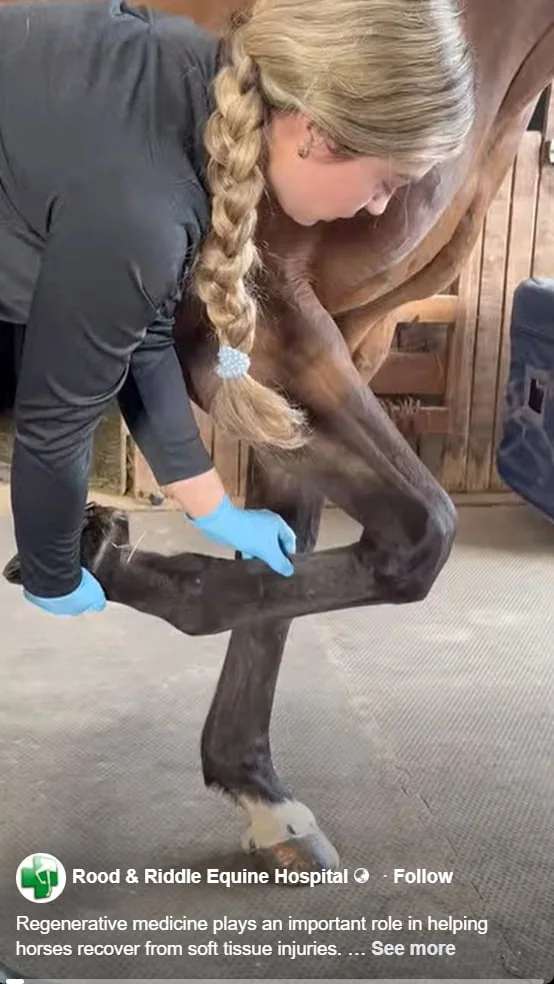
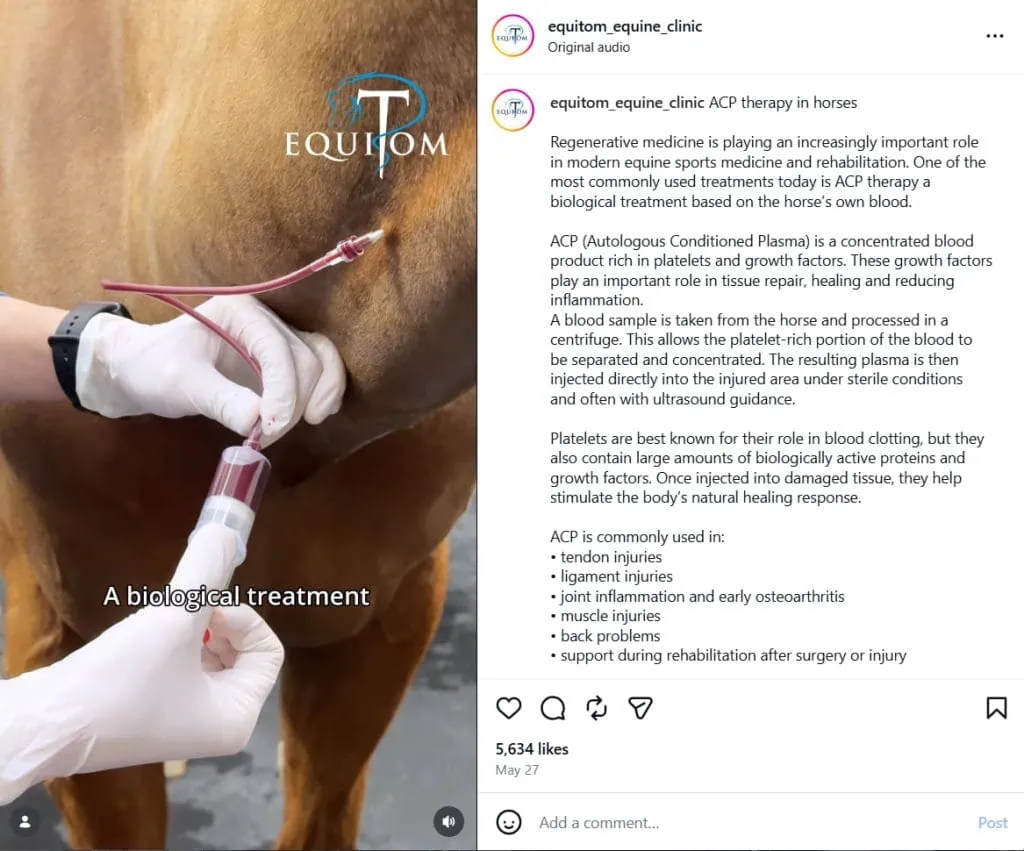
Their social media presence reinforces their expertise without feeling overtly promotional.
The common thread is not flashy marketing. It is consistent communication.
The SEO Value Of Social Media Is Often Indirect – But Still Important
It is important to be realistic about what social media can and cannot do.
Posting regularly on Facebook will not automatically propel your website to the top of Google’s search results. Search engine optimisation is considerably more complex than that.
However, social media can support your visibility in several meaningful ways.
Google evaluates a wide range of signals when determining which businesses appear relevant, trustworthy and authoritative.
Its guidance on local search rankings highlights factors such as relevance, distance and prominence. Prominence can be influenced by information Google finds about a business across the web, including articles, directories, reviews and other references.
What does this mean in practical terms?
It means your digital presence should appear alive.
Your website, reviews, Google Business Profile, educational resources and social media channels should all reinforce the same message: this is a genuine, active and trusted veterinary practice.
Social media contributes to that ecosystem. It can drive visitors back to your website, increase searches for your practice name, encourage sharing of educational content and create additional opportunities for your expertise to be discovered.
It is not a substitute for SEO, but it can strengthen the broader digital footprint that supports it.
Your Website Should Be The Home Base
One of the biggest mistakes veterinarian practices make is treating social media as the primary destination for their content.
The challenge is that social media content is inherently temporary. Even an excellent educational post may disappear from view within days.
Content published on your website, by contrast, can continue attracting visitors for years.
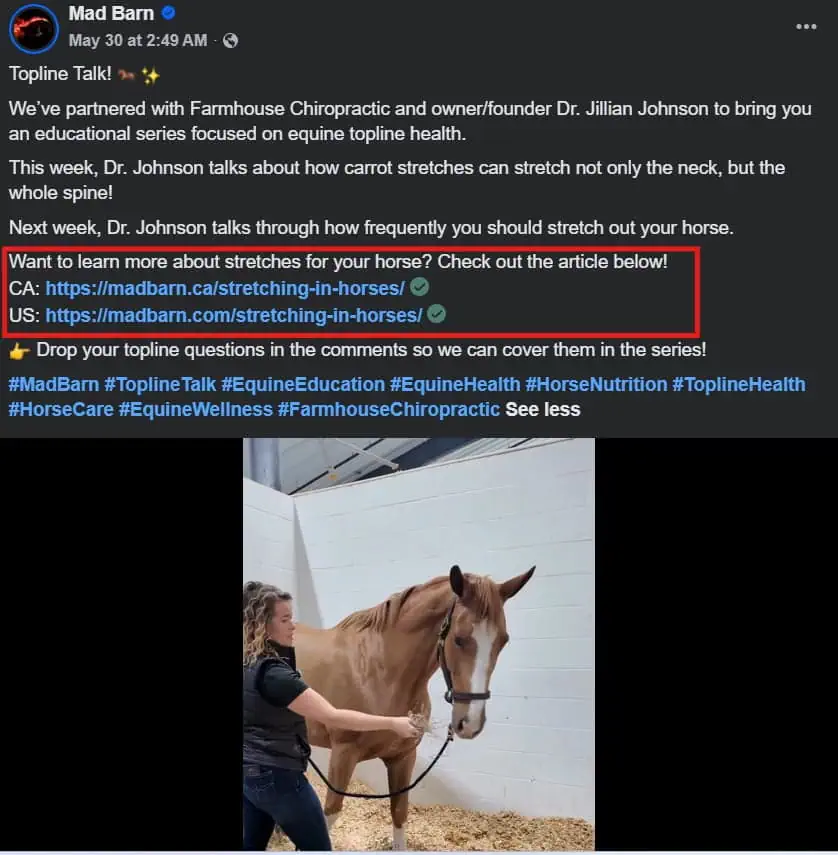
For that reason, I generally recommend creating core educational content on your website first and then repurposing it across other channels.
An article explaining when to call the veterinarian for an eye injury, for example, can be transformed into a Facebook post, an Instagram carousel, a short video, a Google Business Profile update, an email newsletter and a client handout.
Suddenly, one piece of expertise becomes multiple pieces of content.
This approach dramatically reduces the pressure many practices feel around social media. Rather than constantly inventing new material, you are simply presenting the same valuable information in different formats.
Who Owns The Workflow?
One of the most overlooked aspects of social media strategy is accountability.
In many practices, everyone agrees that communication is important, yet nobody is specifically responsible for ensuring it happens.
The practices that succeed tend to appoint a clear owner of the process.
That individual does not necessarily create all the content. Instead, they coordinate the workflow, collect material, oversee approvals and ensure content is published consistently.
Depending on the structure of the practice, this role may sit with a veterinary nurse, technician, practice manager, marketing coordinator, external agency or veterinarian with dedicated administrative time.
The exact title matters less than the principle.
Someone must own the process.
A practical model often involves veterinarians contributing photographs, videos and ideas from the field while administrative or marketing staff handle editing, scheduling and publication.
This allows clinicians to focus on clinical work while still sharing their expertise.
How Do You Get Busy Vets To Contribute?
One of the most common objections I hear is that veterinarians simply do not have time.
In most cases, that is true.
The solution is not to ask clinicians to become content creators. It is to make contribution effortless.
A veterinarian can record a thirty-second voice note while driving between calls, capture a quick photograph after a procedure or send a brief message describing an interesting case.
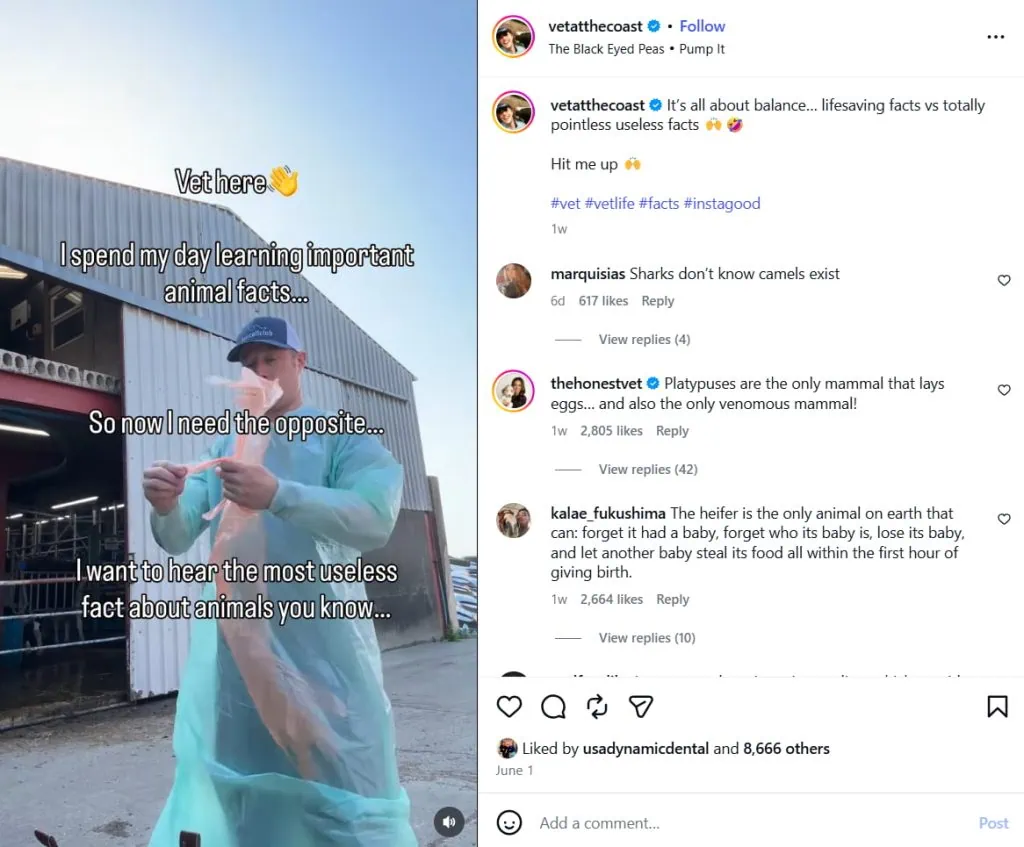
That raw material can then be transformed into multiple pieces of content by whoever manages communications.
Some practices rotate responsibility for capturing content opportunities. Others recognise communication efforts during team meetings or incorporate them into professional development objectives.
The goal is not to create influencers.
The goal is to capture expertise that already exists within the practice.
Consistency Is More Important Than Creativity
If there is one principle I would encourage practices to remember, it is this: consistency matters far more than brilliance.
Social media rarely succeeds through occasional bursts of enthusiasm.
A single useful post every week for twelve months will almost always outperform a month of intense activity followed by six months of silence.
Whether your practice can realistically publish once a week or several times a week is less important than maintaining a pace that can be sustained.
Consistency sends powerful signals.
It reassures clients that you are present. It demonstrates organisational discipline. It helps prospective employees understand that communication is valued. It contributes to a broader pattern of activity that supports your online visibility.
Most importantly, it builds familiarity over time.
Video Builds Trust Faster
While written content remains valuable, video has become one of the most effective ways to build trust.
Clients do not simply want information. They want reassurance.
Video allows them to hear your voice, observe your manner and gain a sense of who you are before they ever pick up the telephone.
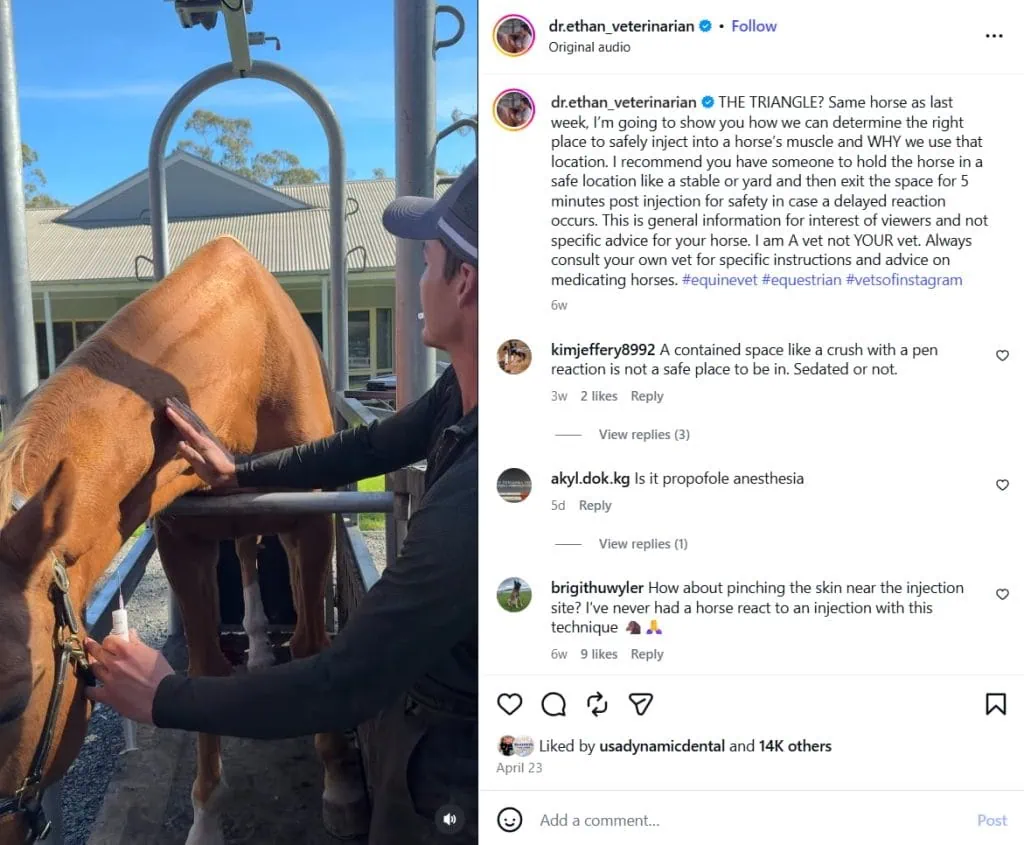
Importantly, these videos do not need to be highly polished.
In fact, some of the most effective veterinary content is remarkably simple.
A veterinarian standing beside a horse explaining the signs of mild lameness, discussing common eye emergencies or outlining what happens during a pre-purchase examination often feels more authentic than a professionally produced advertisement.
The objective is not perfection.
The objective is connection.
Lives, Q&A Sessions And Webinars Create Stronger Attention
For practices willing to invest a little more time, live content can be particularly effective.
A monthly Facebook Live session, an Instagram question-and-answer event or a seasonal webinar allows clients to engage directly with your team.
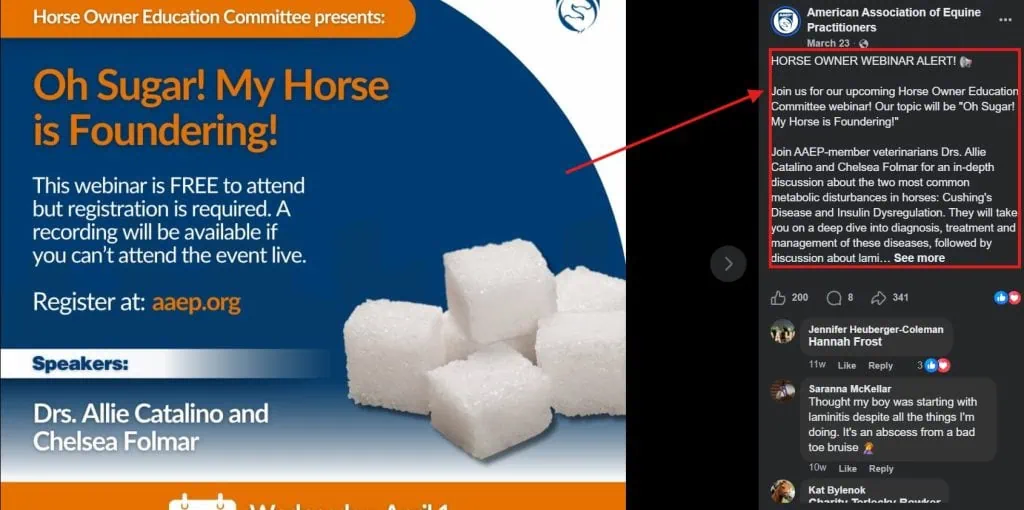
These formats feel immediate and human, which is precisely why they attract attention.
They also offer tremendous efficiency.
A thirty-minute webinar can generate multiple short video clips, social media posts, newsletter content, website articles and frequently asked questions.
The most successful practices do not constantly ask, “What should we post next?”
Instead, they ask, “How can we get more value from the expertise we have already shared?”
What Tools Should Practices Actually Use?
The technology available today makes content creation significantly easier than it was only a few years ago.
Artificial intelligence tools such as ChatGPT and Claude can help transform articles into social media posts, generate FAQs, draft newsletters and suggest content ideas based on common client questions.
Canva remains one of the simplest ways to create professional-looking graphics and educational materials without requiring specialist design skills.
Video editing platforms such as Descript allow practices to edit recordings quickly, generate captions and extract short clips from longer presentations.
Scheduling tools including Buffer, Hootsuite and Later help maintain consistency without requiring daily manual posting.
Meanwhile, Google Analytics and Search Console provide valuable insights into how educational content is performing.
The objective is not to adopt every available tool. It is to create a workflow that allows one piece of expertise to be efficiently repurposed across multiple channels.
Social Media Supports Recruitment
One of the most significant shifts in equine veterinary practice is the role social media now plays in recruitment.
This matters because recruitment is no longer a minor operational issue. For many equine practices, it is one of the biggest threats to growth, service delivery and long-term sustainability.
There is strong demand for experienced equine veterinarians, and good candidates often have choices. The question is not simply whether you can attract applicants. The more important question is whether you can attract the right applicants.
The best veterinarians are not only looking for a job. They are looking for a practice where they can see themselves developing, contributing and enjoying the work.
Before they apply, they will often look you up.
They will visit your website. They will check your social media. They may look at your team page, your photos, your educational posts, your case discussions and the way you present your practice culture.
What story are they being told?
Do they see a practice that invests in its people?
Do they see mentorship, continuing education, collaboration and professional growth?
Do they see a team that appears engaged, supported and proud of the work they do?
Or do they see very little at all?
In a competitive employment market, silence can be costly.
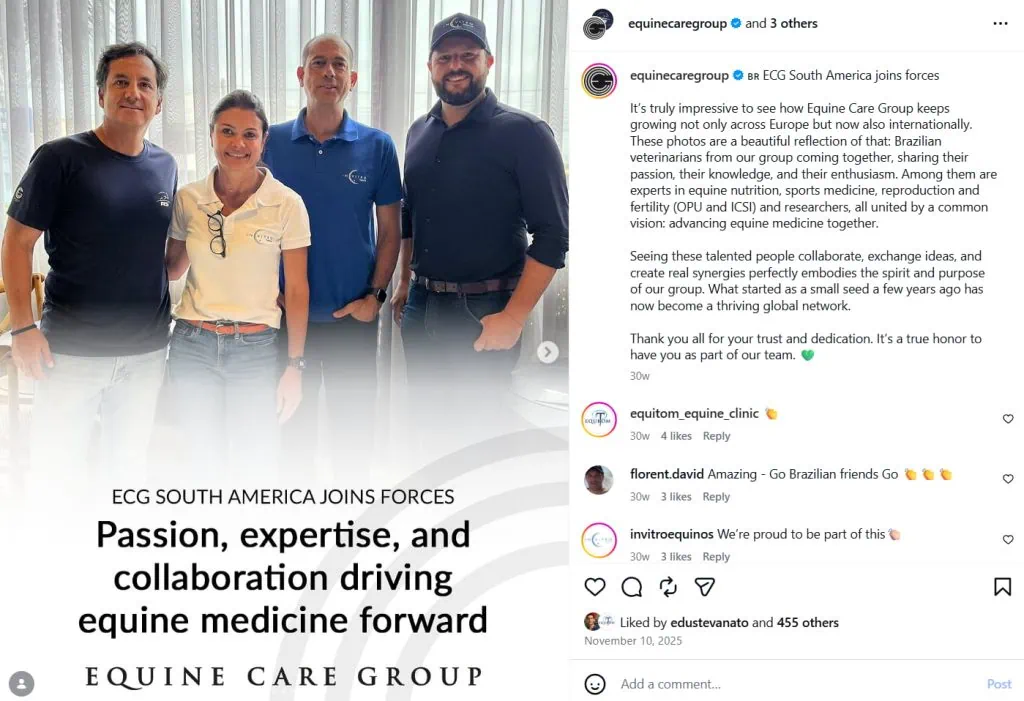
Social media gives practices an opportunity to show prospective employees what it actually feels like to work there. It can demonstrate the standard of medicine, the quality of the team, the learning environment, the leadership culture and the values of the organisation.
That does not mean trying to make the practice look perfect. It means giving future team members enough evidence to imagine themselves being part of it.
For equine practices, social media is no longer only a client communication tool. It is also an employer branding tool.
And in a market where every strong equine veterinarian matters, that may be one of its most important functions.
Social Media Helps Shape Client Behaviour
Good communication does more than attract attention.
It influences behaviour.
Practices that consistently educate clients about colic, wounds, lameness, vaccination, dentistry and preventive healthcare often find that conversations become easier and more productive.
Clients recognise problems earlier. Expectations become more realistic. Compliance improves. Trust grows.
This is not marketing for marketing’s sake.
It is communication that supports better clinical outcomes.
And that benefits everyone involved.
Client Consent Matters
As practices become more active online, it is essential not to overlook consent.
The fact that a horse is under your care does not automatically grant permission to use photographs or videos for educational or promotional purposes.
Every practice should establish a clear and transparent consent process.
Clients should understand what content may be used, where it may appear and whether identifying details will be removed. They should also know how consent can be withdrawn if circumstances change.
When uncertainty exists, asking permission is always the safest approach.
Trust is difficult to build and remarkably easy to lose.
AI Has Changed The Game Again
The way horse owners seek information is changing rapidly.
Increasingly, they are not simply searching Google. They are asking AI-powered tools questions about symptoms, emergencies and treatment decisions.
This creates both challenges and opportunities.
Practices with little educational content online risk becoming invisible within these emerging information ecosystems.
Practices that consistently publish useful, accurate and trustworthy content are building a stronger digital footprint that may become increasingly valuable as AI-driven search evolves.
Nobody can predict exactly how these technologies will develop.
However, it seems increasingly likely that organisations with a substantial body of high-quality content will be easier for both humans and machines to understand and trust.
What Should Equine Practices Actually Post?
The simplest answer is often the best one.
Start with the questions clients already ask.
Every day, veterinarians answer enquiries about emergencies, seasonal health concerns, preventive care, common misconceptions and treatment decisions.
Those conversations are a goldmine of content ideas.
Educational posts, team introductions, behind-the-scenes insights, continuing education updates, community involvement and carefully anonymised case discussions all help demonstrate expertise while strengthening relationships.
The goal is not to entertain for the sake of entertainment.
The goal is to be useful, help horse owners make better decisions, and position your clients as the heroes of their horse’s healthcare journey – with your practice serving as the trusted guide along the way.
The Best System Is The One You Can Repeat
Many practices assume they need an elaborate content strategy.
In reality, a simple and repeatable system is often far more effective.
Publishing one educational article each month, creating four social media posts from that article, recording a short supporting video and sharing the content through email and Google Business Profile updates would place many practices ahead of their competitors.
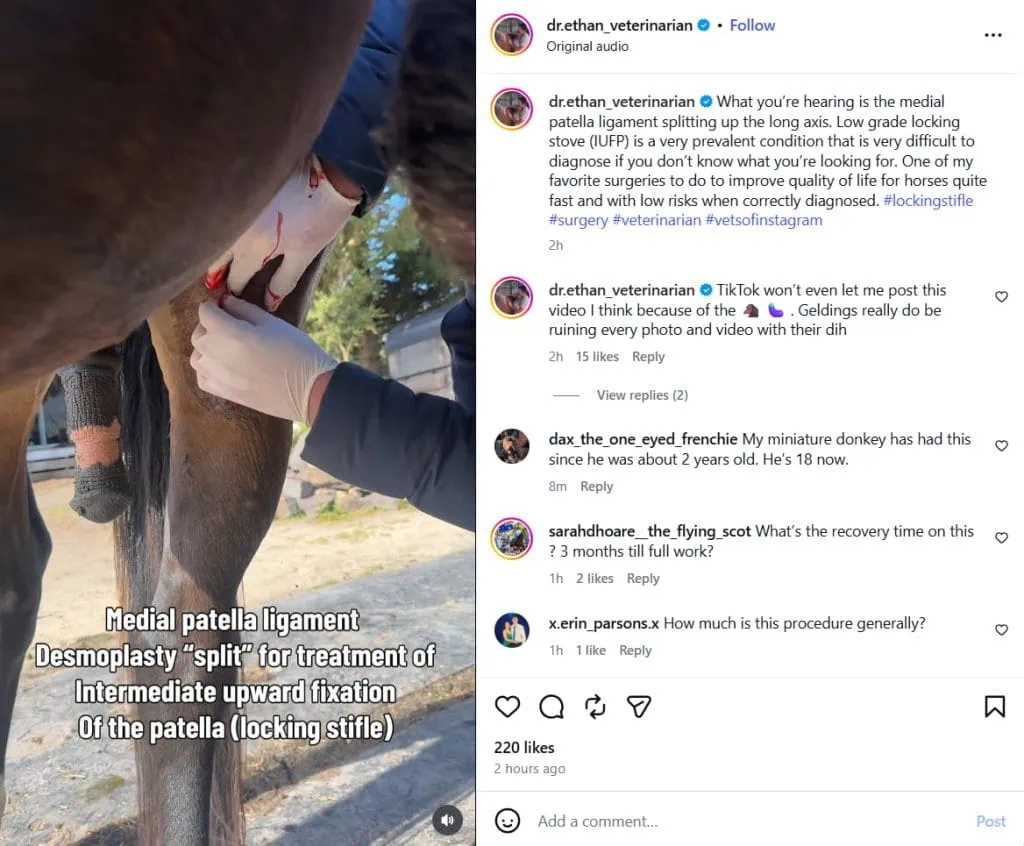
The strategy itself is not particularly sophisticated.
Its strength lies in consistency.
Stop Measuring Only Likes
Likes and comments have their place, but they rarely tell the whole story.
More meaningful questions include:
Are more people searching for our practice by name?
Is website traffic increasing?
Are clients mentioning our educational content?
Are job applicants referencing our online presence?
Are our reviews improving?
Are our educational resources attracting visitors?
Are we becoming more visible within our local community?
These indicators provide a far more accurate picture of whether trust is being built over time.
What Should Be On The Monthly Dashboard?
If social media is part of your trust infrastructure, then your reporting should reflect that reality.
A useful monthly dashboard might include website traffic, organic search visibility, Google Business Profile views, video watch time, newsletter engagement, review volume, referral enquiries, recruitment metrics and content production statistics.
The objective is not to determine whether a particular post received one hundred likes.
The objective is to understand whether your practice is becoming more visible, more trusted and more influential within the communities it serves.
Final Thoughts
The role of social media within equine veterinary practice has changed fundamentally.
It is no longer simply a marketing channel. It is part of the infrastructure through which trust is built and maintained.
It supports visibility, strengthens reputation, educates clients, attracts employees and amplifies the value of the expertise already present within your practice.
However, successful communication does not happen by accident.
Someone must own the process. Clinicians need simple ways to contribute. Consent procedures must be clear. Technology should reduce workload rather than increase it. Success should be measured through trust, visibility, recruitment and educational impact – not merely engagement metrics.
No equine veterinarian needs to become an influencer.
But every equine veterinary practice should recognise that silence online communicates something too.
In a world where horse owners, prospective employees, search engines and AI systems are all trying to determine who deserves their trust, consistently sharing useful expertise may be one of the most valuable investments a practice can make.