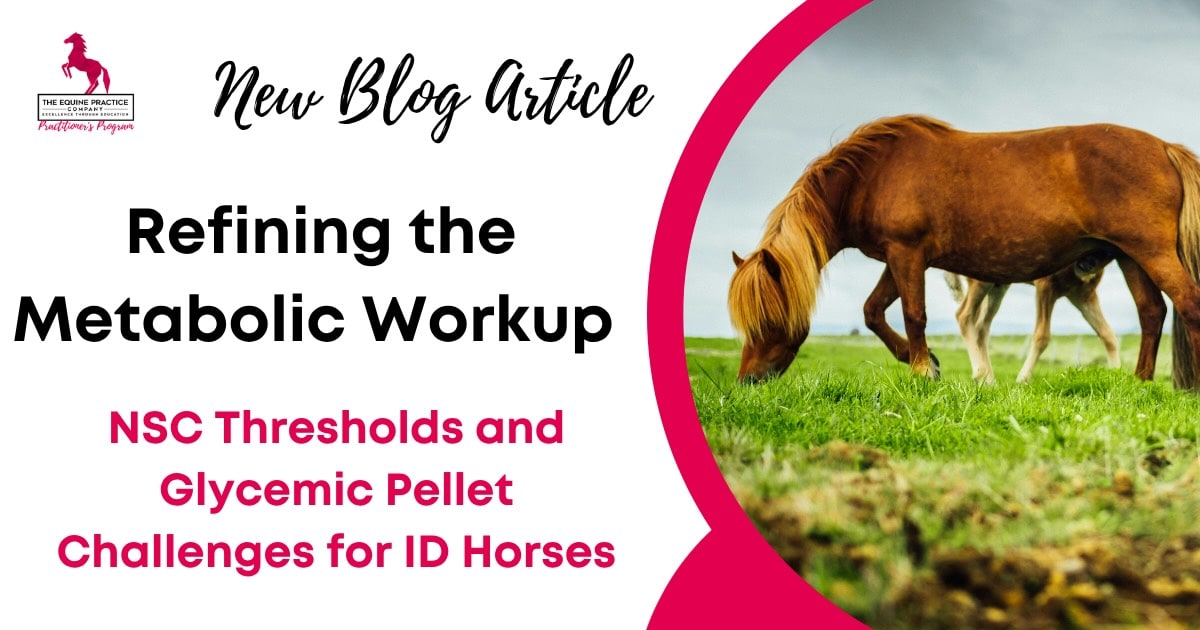
Refining the Metabolic Workup: NSC Thresholds and Glycemic Pellet Challenges for ID Horses
Managing the “metabolic” horse is one of the most high-stakes tasks in equine practice. The gap between a horse being “clinically managed” and suffering a laminitic episode often comes down to a few percentage points of Non-Structural Carbohydrates (NSC).
Recent research from 2024 and 2025 has provided clinicians with much-needed clarity on dietary thresholds and more practical ways to perform dynamic insulin testing in the field.
1. Identifying the 0.1 g/kg Threshold
One of the most frequent questions from clients is: “How much sugar is too much?” Research in the Equine Veterinary Journal has finally provided a concrete number for insulin-dysregulated (ID) horses.
The study identified that an NSC intake greater than 0.1 g/kg of body weight per meal triggers a significantly augmented insulin response in ID horses.
For a 500kg horse, this is a mere 50 grams of NSC. Understanding this threshold allows veterinarians to provide precise, evidence-based feeding recommendations that move beyond general “low-carb” advice.
2. The Evolution of Field Testing: The Glycemic Pellet Challenge (GPC)
The Oral Sugar Test (OST) using corn syrup has long been the field standard, but it faces challenges with palatability and messy administration.
- The GPC Alternative: A 2024 study evaluated a customized glycemic pellet (0.5g soluble CHO/kg BW) as a diagnostic tool.
- Key Findings: The pellets were palatable to over 84% of horses and produced higher, more consistent peak glucose and insulin levels than the OST.
- Clinical Timing: Peak responses occurred at 120 minutes post-consumption, providing a reliable window for blood collection in ambulatory practice.
3. Nutraceuticals as a Metabolic Safety Net
Can we mitigate the damage of an accidental “sugar spike”? New data suggests we can. A 2024 study demonstrated that a specific nutraceutical blend (Omega-3s, Vitamin E, and active yeast) helped improve glucose clearance by 61% in ID horses challenged with a high-starch diet.
While not a substitute for forage management, these supplements act as a vital buffer for horses prone to hyperinsulinemia.
Bridge the Gap to Hands-On Mastery
Managing the metabolic horse requires a deep understanding of endocrine pathways and the ability to interpret fluctuating lab results. The Practitioner’s Program provides the advanced mentorship needed to handle these complex cases with confidence.
Member Call to Action: Log in now to watch these expert-led modules by Dr. Dave Rendle:
- Equine Metabolic Syndrome (EMS) Parts 1 & 2: Advanced Diagnostics and Interventions.
- Equine Pituitary Pars Intermedia Dysfunction (PPID): Navigating the latest testing protocols.
- Clinical Nutrition for Common Equine Conditions: Formulating diets that work in the real world.

References:
- Macon EL, et al. (2024). Identifying Possible Thresholds for Nonstructural Carbohydrates in the Insulin Dysregulated Horse. Equine Veterinary Journal.
- De Laat MA, et al. (2024). Carbohydrate Pellets to Assess Insulin Dysregulation in Horses. Journal of Veterinary Internal Medicine.
- Loos C, et al. (2024). Nutraceutical Supplement Mitigates Insulin Resistance in ID Horses. Animals.
- Practitioner’s Program 2026 Annual. The Equine Practice Company.