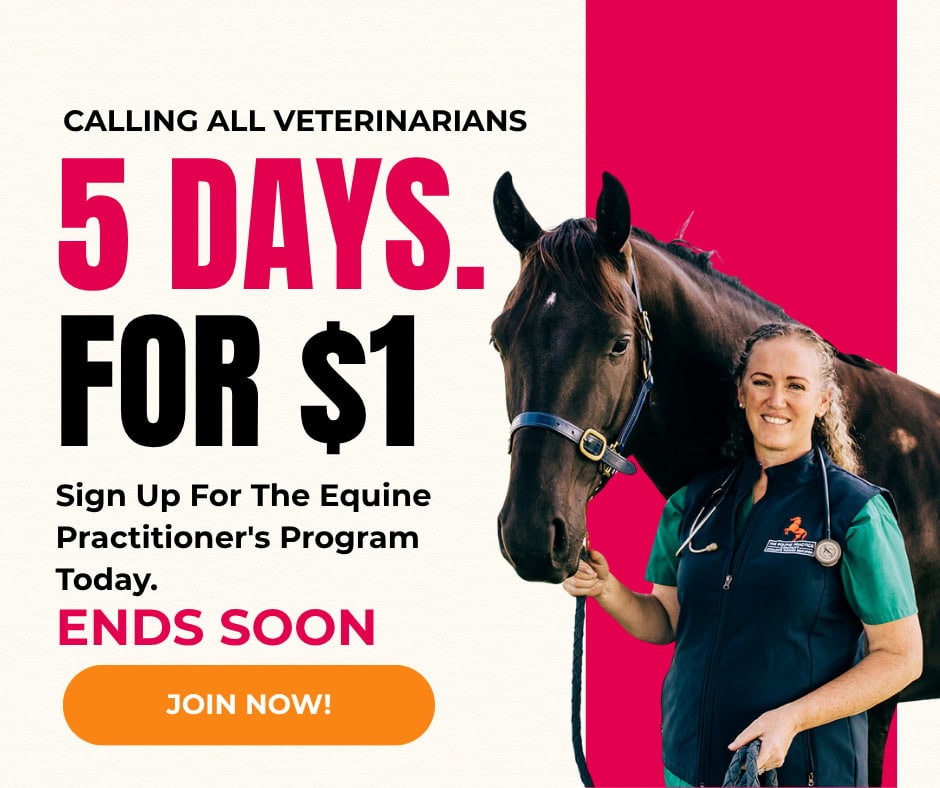
Dr. Gertrud Nijborg – From Utrecht to the Tasmanian Wilderness
For many, the path to equine practice is linear; for Dr. Gertrud Nijborg, it has been an international evolution defined by adaptability.
A 1999 graduate of the world-renowned Utrecht University in the Netherlands, Gertie brought a rigorous European foundation in veterinary medicine to Australia, eventually settling in the rugged, breathtaking landscape of Southern Tasmania.
Her clinical identity was forged in the high-pressure environment of Emergency and Critical Care (ECC). Spending over a decade as a senior clinician at the AES (Animal Emergency Service), she developed the “ice in the veins” necessary to handle complex cases where the nearest referral centre might be hours away.
This background in triage and acute medicine provided the perfect springboard for her transition into independent practice.
However, Gertrud Nijborg’s expertise isn’t limited to the clinic. She is a familiar face in the starting boxes and dressage arenas of the Southern Tasmanian Eventing Association (STEA).
A former “Horse of the Year” champion with her horse Campari Soda, she views every case through the dual lens of a highly skilled surgeon and a dedicated rider. She understands, intimately, that in a remote region, a vet isn’t just a service provider – they are a vital part of the equestrian community’s lifeline.
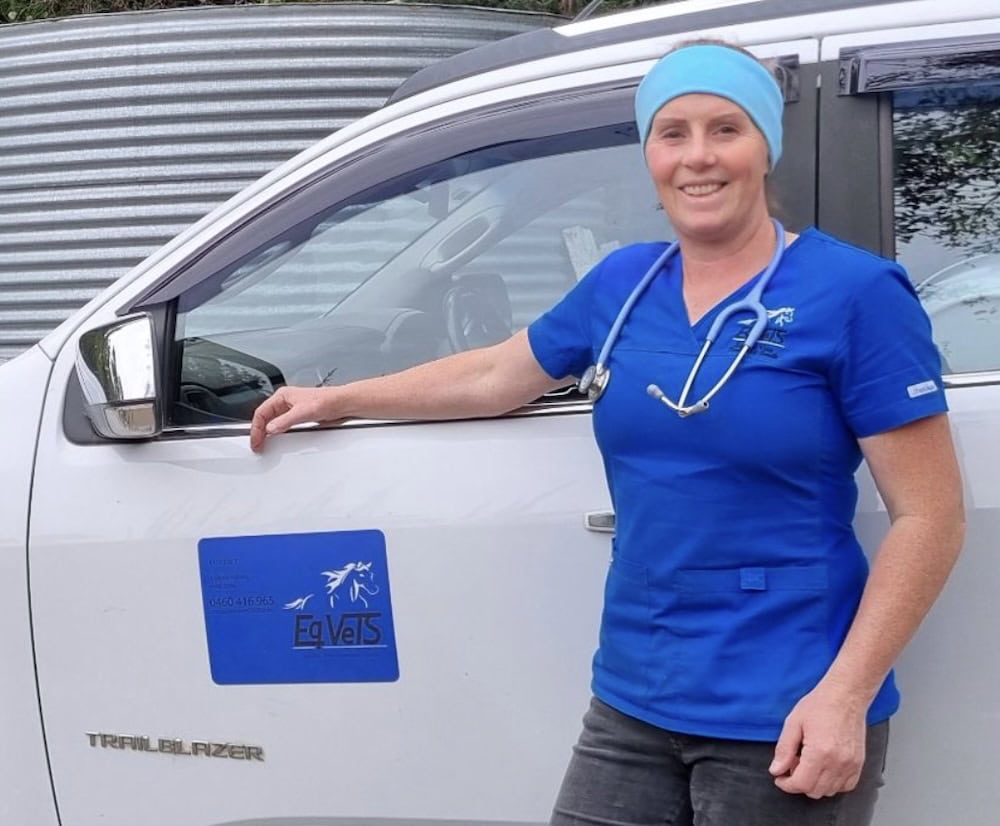
Today, operating as Equine Vets Tasmania, Dr. Gertrud Nijborg has mastered the art of “MacGyvering” solutions in the field while maintaining a uncompromising standard of business discipline.
We caught up with Dr. Gertrud to discuss the “unknown unknowns” of starting a business and why knowing what you don’t want is the ultimate key to professional longevity.
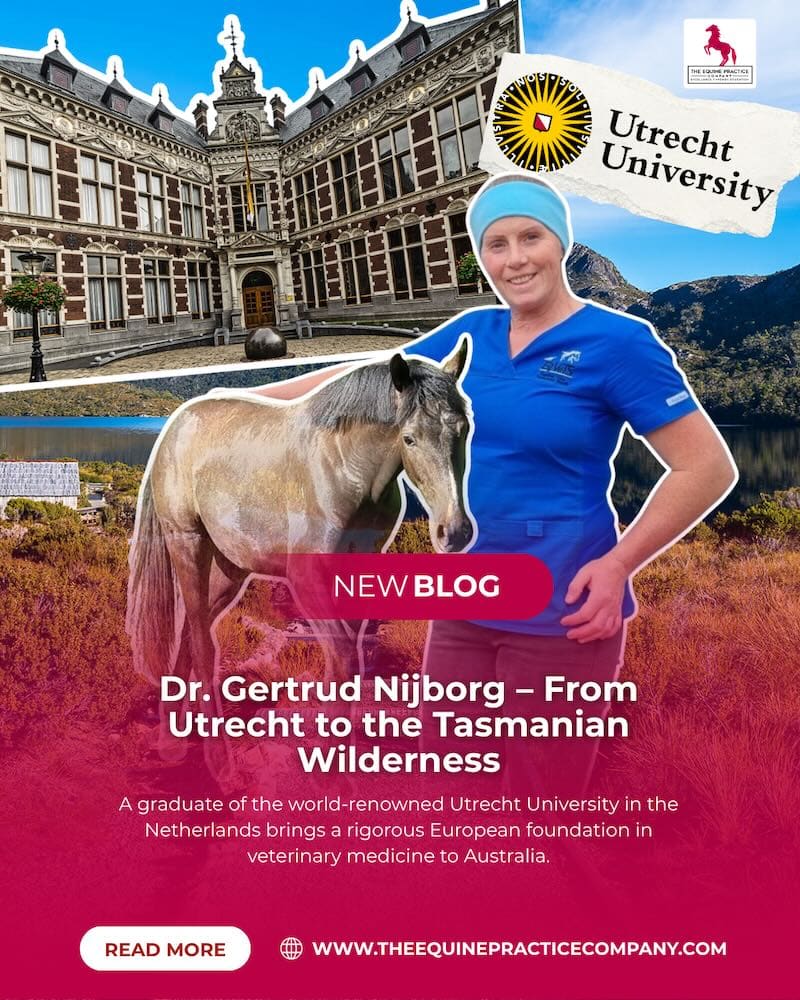
Running an Equine Practice
Running an equine practice in a remote region requires more than just clinical skill. It requires business discipline, the ability to improvise, and a deep understanding of your own “non-negotiables.”
1. What were the biggest challenges in establishing a practice in a remote region like Tasmania?
Dr. Nijborg: “My main challenges were navigating the requirements from government bodies and the Veterinary Board – licensing, certificates, ABNs, and choosing between being a sole trader or a business. Then there’s the insurance: indemnity, liability, and equipment cover.
I discovered a lot along the way. My biggest challenge was simply that ‘you don’t know what you don’t know.’ If I were starting again today, I would compare suppliers and prices immediately!
It took me a year of buying from a local medical supplier to realize I could save hundreds by switching companies. Don’t just assume prices are similar.”
2. How do you approach complex cases when specialists aren’t immediately available?
Dr. Nijborg: “I feel very lucky to have several good colleagues and friends on ‘speed dial.’ While we have a great surgical facility in Northern Tasmania for referrals, sometimes not having that option immediately available makes you better at improvising.
You do the best you can under the circumstances. Most horse owners in Tassie are very aware that not every diagnostic modality is available to them, which fosters a very realistic and collaborative relationship between vet and client.”
3. How do you maintain financial sustainability while delivering high-quality care?
Dr. Nijborg: “Due to my experience in ECC, I have a solid understanding of how to charge appropriately and fairly. I am very disciplined in making sure I charge for everything I do.
I do not offer discounted or cheap services. I am very invested in my patients, and that attracts clients who value that care and follow my recommendations. I regularly re-evaluate my charges and adjust as needed. Financial sustainability allows me to keep providing the level of care these horses deserve.”
4. How do you decide when to bring in a specialist?
Dr. Nijborg: “Because I am a more senior veterinarian, I’ve had many years to build relationships with a large network of great vets.
Whether I bring in a specialist depends on how far my clients are willing to go, but it is an option I always provide. When I do bring in another veterinarian – whether they are a specialist or just more experienced in a specific field. I always make sure I am learning from them in that moment.”
5. What is your advice for vets considering a leap into regional solo practice?
Dr. Nijborg: “My greatest asset has been flexibility – spending time with patients without rushing and building honest relationships with clients.
I strongly recommend working in different settings for different employers first to find out what you don’t want. It’s easy to think you know what you want, but that changes.
Knowing what you don’t want is much more important; it helps you end up where you actually belong, even if it’s different from where you thought you’d be.”
Learning Beyond the Clinic
Dr. Gertrud Nijborg’s journey highlights that the best veterinarians are those who never stop being students. Whether it’s discussing a non-routine case with a peer or refining business systems, growth is a constant.
The Equine Practitioner’s Program is built to support veterinarians exactly like Dr. Nijborg – those who are out in the field, making high-stakes decisions every day. Our program provides the peer support and specialist insight you need to turn “improvisation” into “mastery.”
Join a community that understands the unique challenges of regional practice.