

Mid-Level Practitioners in Veterinary Medicine: Why Equine Vets Can’t Afford to Be Silent
The term Mid-Level Practitioner (MLP) – also called a Veterinary Professional Associate (VPA) – is no longer theoretical in veterinary medicine.
In 2025, Colorado became the first U.S. state to formally authorise this role, allowing non-veterinary degree holders to diagnose, prescribe, and perform surgical procedures under defined supervision.
For equine veterinary professionals, this development raises urgent clinical, ethical, and professional questions.
This article explains what the Mid-Level Practitioner role actually is, how it differs from veterinarians and credentialed technicians, where it is being implemented, and why major professional bodies – including the American Association of Equine Practitioners – have formally opposed its expansion.
If you work in equine veterinary practice, this is not an abstract policy debate. It directly affects:
- clinical responsibility and liability
- standards of care for horses
- client trust
- and the long-term structure of our profession
What Is a Mid-Level Practitioner (MLP) in Veterinary Medicine?
A Mid-Level Practitioner (MLP) or Veterinary Professional Associate (VPA) is a proposed or legislated role in which an individual without a veterinary degree is authorised to perform selected clinical tasks – including diagnosis, prescribing, and limited surgery – under a supervising veterinarian.
The role is modelled loosely on physician assistants in human medicine, but differs significantly in training depth, scope clarity, and regulatory oversight.

Why the Mid-Level Practitioner Debate Matters to Equine Veterinarians
Equine veterinarians have spent years – often decades – earning the responsibility to make high-stakes clinical decisions.
The early mornings studying in cold lecture halls, the long nights on call, the student debt, the missed family events, the sacrifices we made because we believed the work was worth it. Because we knew that being an equine veterinarian wasn’t just a job – it was a calling.
That’s why the rise of the Mid-Level Practitioner (MLP), or Veterinary Professional Associate (VPA), hits such a raw nerve. In Colorado, this role is no longer theoretical – it’s here. And the push to expand it nationally throughout the USA is gaining momentum.
For many of us, this isn’t about professional pride. It’s about protecting the quality of care our patients receive, the trust our clients place in us, and the standards we’ve fought to uphold.
It’s about ensuring that the subtle, high-stakes, and often life-or-death decisions in equine practice remain in the hands of those trained and licensed to make them.
In this post, I want to unpack what this new role means, why it’s dividing our profession, and why the future of equine veterinary medicine depends on us speaking up – loudly and with one voice.
Why Mid-Level Practitioners Are Dividing the Veterinary Profession
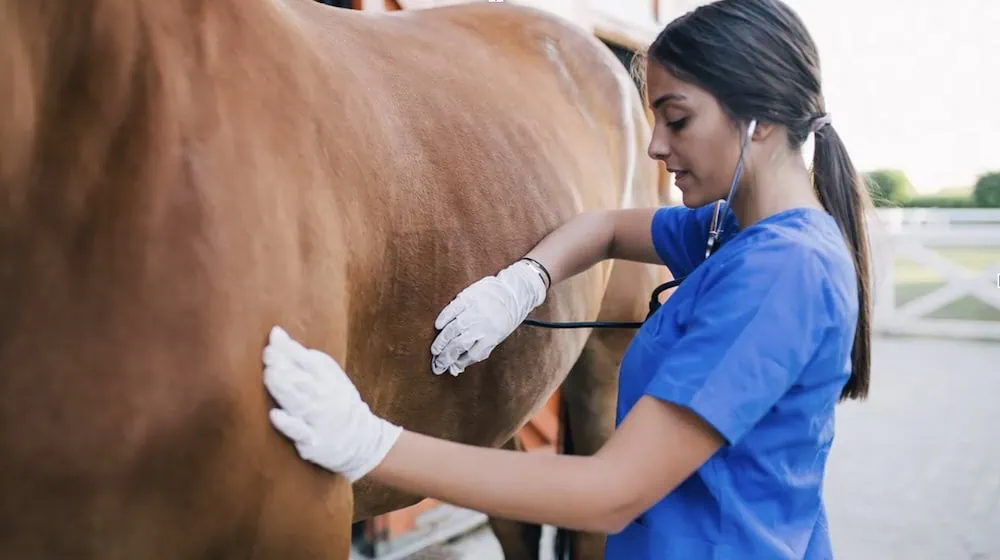
The introduction of Mid-Level Practitioners (MLPs) in veterinary medicine has triggered widespread concern among equine veterinarians, regulators, and professional associations due to its impact on patient safety, liability, and professional standards.
If you’ve been anywhere near a veterinary news feed lately, you’ve seen it: Colorado has officially created the Mid-Level Practitioner (MLP) or Veterinary Professional Associate (VPA) role.
The first cohort starts training this year. On paper, these individuals will be able to diagnose, prescribe, create treatment plans, and even perform surgery – all without holding a veterinary degree.
Supporters are calling it a solution to workforce shortages. But if you’ve been in the field long enough, you’ll know the reality: complex equine cases don’t fit neatly into “routine” and “advanced.” Horses don’t read textbooks.
That colic that looked straightforward at 2pm can spiral into a surgical emergency by 5pm. That subtle lameness could be an early sign of a career-ending injury.
The stakes are too high to delegate these calls to someone without the depth of education and clinical exposure it takes to recognise them.
This isn’t just our opinion.
The American Association of Equine Practitioners has formally opposed the creation of Mid-Level Practitioner and Veterinary Professional Associate roles, stating that diagnosis, prescribing, and surgical decision-making must remain the responsibility of licensed veterinarians to protect equine welfare, client trust, and professional standards.
What’s Really at Risk
This isn’t about protecting turf for the sake of ego. It’s about protecting patients, clients, and the profession we’ve dedicated our lives to.
Here’s what keeps me awake at night about Mid-Level Practitioner’s:
- Lowering the standard of care – These roles blur the line between a fully qualified veterinarian and someone with a fraction of the training. That’s not just semantics; it’s risk to horses’ lives.
- Erosion of public trust – Clients assume the person treating their horse has a veterinary degree. If they discover otherwise, their trust in all of us suffers.
- Increased liability – Supervising veterinarians could be held responsible for mistakes made by someone they didn’t train, can’t fully oversee, and whose role is vaguely defined by law.
- Undermining the veterinarian–technician team – Instead of investing in and fully utilising our credentialed technicians, we’re inserting a new layer that disrupts team structure and morale.
The AAEP echoed these same concerns in its 2025 position statement, warning that the MLP/VPA role blurs professional boundaries, places additional burdens on supervising vets, and disrupts existing team structures without solving workforce shortages.
What the Evidence (and Experience) Tells Us
Workforce shortages are real. We all feel the strain. But there is no evidence that Mid-Level Practitioners will fix it, especially in underserved areas.
If history in human medicine teaches us anything, mid-level providers tend to cluster in the same urban and suburban areas as existing professionals.
Meanwhile, our credentialed veterinary technicians – highly skilled, licensed professionals – are underutilised and underpaid. They’re leaving the profession not because they don’t love it, but because the conditions aren’t sustainable.
If we direct the energy, money, and political capital being spent on Mid-Level Practitioner’s and Veterinary Professional Associates (VPA) into technician retention and training, we’d see immediate, tangible improvements in practice capacity without compromising care.
The Colorado Model: A Case Study in Concern
Colorado State University’s program is five semesters long. Three online, one on-campus intensive, and one clinical internship. In two years, graduates could be making the same clinical decisions it took you 5+ years of veterinary school and countless hours in the field to master.
Ask yourself: would you hand over a complex colic, a dystocia, or a subtle neurological case to someone with that training? Would you trust them to make the right call without your eyes on the horse?
Where We Go From Here
The AAEP, AVMA, and AAEVT have all taken strong public stances against Mid-Level Practitioners. This is our chance to unite behind them. That means:
- Speaking up – to state VMAs, legislators, and within our own clinics.
- Educating clients – so they understand the difference in training, and why it matters for their horse’s welfare.
- Investing in our teams – improving pay, work-life balance, and continuing education for technicians.
- Adopting efficiency tools – telemedicine, better scheduling systems, and technology that supports – not replaces – skilled clinicians.
It’s exactly this kind of scope creep that the AAEP flagged in its opposition statement – placing advanced clinical decision-making in the hands of individuals without full veterinary training undermines patient safety.
A Better Path Forward
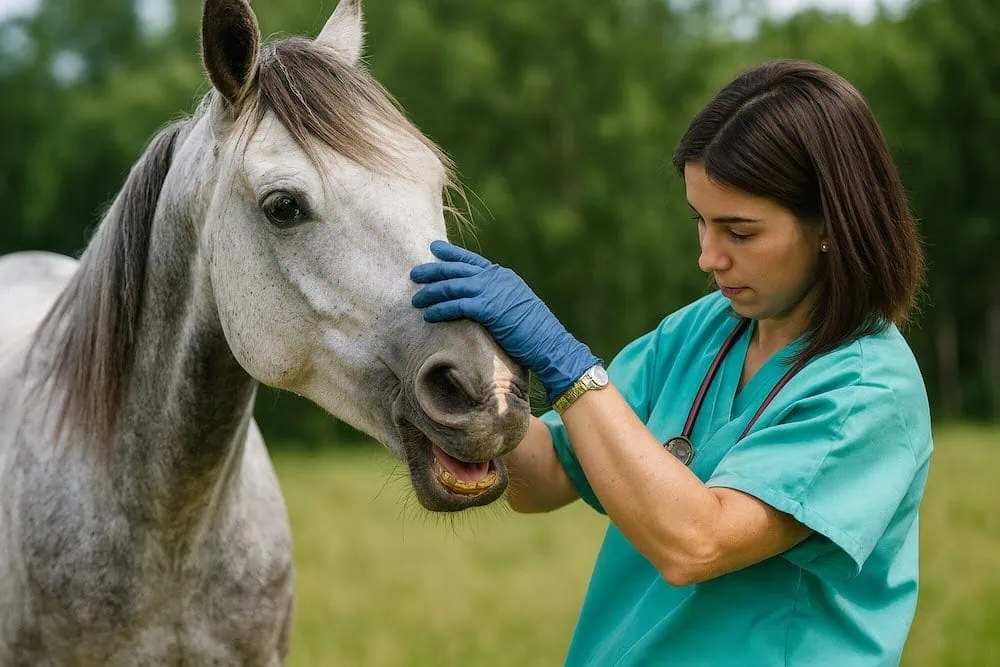
It’s not enough to simply say no to Mid-Level Practitioner’s. If we want to protect our profession and the horses we care for, we need to address the real issues driving the workforce shortage – and we need to do it without lowering the bar on patient care.
Here’s what that could look like:
1. Funded Equine Internship & Rural Service Incentives
Governments could create programs that subsidise the first 1–2 years of an equine vet’s career in underserved areas, similar to rural GP incentives in human medicine.
This removes a huge financial barrier for graduates and places skilled clinicians exactly where they’re needed most.
2. Return-to-Equine Training Pathways
Many experienced vets have left equine practice due to burnout, lifestyle, or financial pressures.
We should be funding bridging programs with paid retraining and mentorship to bring them back – with the skills, confidence, and support to thrive.
3. Loan Forgiveness for Equine Practice
Student debt is crippling. Offering loan repayment for every year served in equine practice (especially in rural regions) would change the career math overnight for new grads who love horses but can’t afford the pay cut compared to small animal work.
4. Advanced Technician Training & Retention
Our credentialed technicians are one of our greatest untapped assets.
Let’s create government-backed grants for advanced training in dentistry, anaesthesia, and orthopaedics – so they can carry more load within their legal scope and stay in the profession longer.
5. Subsidised Technology for Field Work
From portable ultrasounds to AI-assisted lameness detection, better tools mean faster, more efficient field work.
Governments or states could fund diagnostic equipment for rural vets, making it possible to cover more ground without compromising quality.
These solutions don’t blur professional boundaries. They strengthen them. They address the root causes of our workforce challenges, improve retention, and keep decision-making in the hands of fully trained veterinarians.
Because the answer to a shortage of veterinarians isn’t to create fewer veterinarians in more titles. It’s to make equine veterinary medicine a viable, sustainable, and respected career path for the long haul.

Final Word
We’ve fought too hard to let the boundaries of our profession be quietly redrawn.
Equine veterinary medicine is built on years of rigorous training, countless hours in the field, and the trust of owners who put their horses’ lives in our hands. That’s not something you can compress into a master’s program.
And make no mistake. This isn’t just a USA issue. Veterinary regulators and policymakers around the world are watching closely.
If Mid-Level Practitioners and/or Veterinary Professional Associates (VPA) take hold in the United States, it will be used as a model elsewhere. Australia, the UK, New Zealand, Europe. The ripple effect could reach all of us.
As equine veterinarians, no matter which country we call home – we need to stand together. Because the standard of care we set today will shape the profession for decades to come.
This isn’t fearmongering. It’s protecting the future of our patients and our profession. And if we don’t lead this conversation, someone else will. And they may not share our priorities.
With the AAEP’s position now clear, the message is unmistakable: our profession cannot afford silence. It’s time to stand together – globally – for our patients, our profession, and the future of equine veterinary medicine.
This article is written by an equine veterinarian with over a decade of clinical experience in ambulatory and referral-level equine practice.
The author has attended and spoken at international veterinary conferences, worked alongside regulatory bodies, and mentors equine veterinarians globally on clinical standards and professional development.
Dr. Olivia James regularly contributes to professional education initiatives and engages with policy discussions affecting equine veterinary practice worldwide.
Frequently Asked Questions About Mid-Level Practitioners in Veterinary Medicine
Are Mid-Level Practitioners allowed to diagnose and prescribe?
Yes. In Colorado, the Veterinary Professional Associate role permits diagnosis, prescribing, and selected surgical procedures under defined supervision.
Does the AAEP support Mid-Level Practitioners?
No. The American Association of Equine Practitioners has formally opposed MLP/VPA roles, citing risks to equine welfare and erosion of veterinary standards.
Are Mid-Level Practitioners the same as veterinary technicians?
No. Credentialed veterinary technicians work within a defined supportive scope. MLP/VPA roles expand into clinical decision-making traditionally reserved for veterinarians.
Will this affect equine practice outside the U.S.?
Potentially. Regulatory bodies in other countries are closely monitoring U.S. developments, and similar proposals may follow if unchallenged.