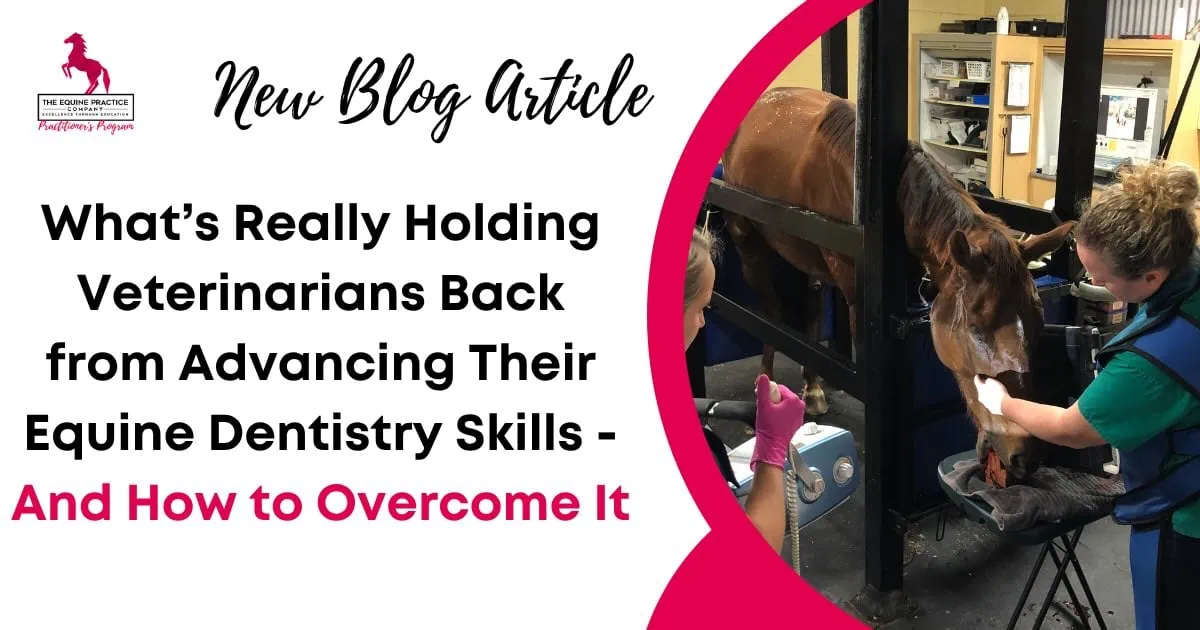
What’s Really Holding Veterinarians Back from Advancing Their Equine Dentistry Skills – And How to Overcome It
If you’ve ever finished a float and thought, “I hope I didn’t miss something important,” you’re not alone – and it’s not your fault.
Across the profession, equine veterinarians tell us the same story: they want to be better at dentistry, but something keeps getting in the way.
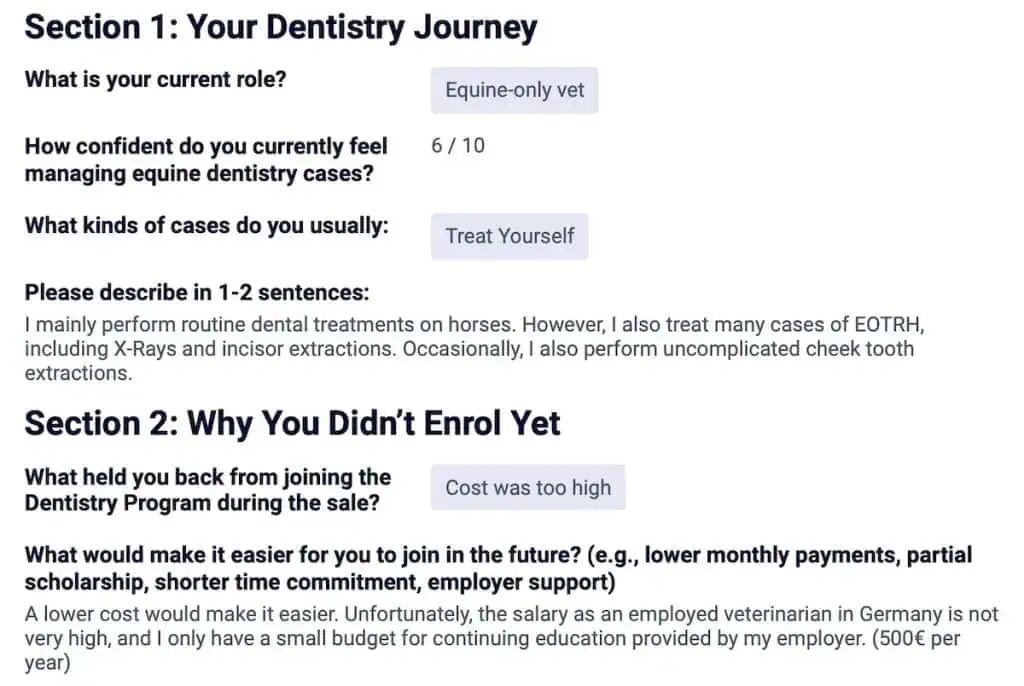
We analysed hundreds of survey responses from equine and mixed-practice vets around the world after our recent dentistry promotion (and thanks to everyone who completed the survey) – and the patterns were strikingly consistent.
Four obstacles came up again and again.
1. Dentistry Is Barely Taught in Vet School
“I feel comfortable with basic floats, but not confident diagnosing or treating advanced cases.” – Caroline W, Mixed-practice vet, Australia
Most veterinarians graduate having spent less than four hours on equine dentistry during their degree. A 2016 survey of 35 veterinary schools confirmed that 43 percent provide under four hours of dental lectures and over half offer fewer than four hours of practical lab time.¹ Only about one in four programs require a dental rotation before graduation.
It’s no wonder so many new grads feel underprepared. Equine dentistry is typically treated as an elective – squeezed between anaesthesia and reproduction – rather than a core clinical skill.
That gap follows practitioners into the field. Many learn by trial and error, without the structured feedback loop that cements good habits. The outcome? Missed pathology, inconsistent confidence, and an uneasy sense that you’re “getting by” rather than mastering a discipline that every horse needs annually.
2. The Cost-and-Time Barrier Is Real
“I want to do more CE, but it’s expensive and I can’t leave the clinic for a week.” – Sarah K, Equine practitioner, UK
Veterinarians are lifelong learners – yet the logistics of continuing education often feel impossible.
Multiple international studies show that time, distance and money remain the three biggest barriers to CPD participation.²
In one large UK survey, 41 percent of vets paid part of their CE costs personally, and most cited lack of leave or clinic coverage as a major obstacle.³ For ambulatory equine vets, stepping away from clients means lost income and disappointed owners – a tough trade-off for even the most motivated clinician.
These are real, structural issues. But they’re not insurmountable. Online, modular programs now allow vets to learn in 30-minute blocks rather than week-long intensives. When education fits around real life, progress becomes possible – even during foaling or competition season.
3. Confidence Gaps and “Imposter Syndrome”
“I’d love the confidence to see the issues I’m missing and treat them properly.” – Emily S, Recent graduate, UK
This one surprised even me: nearly 70 percent of veterinarians in a recent international survey scored above the threshold for imposter syndrome – that feeling of doubting your own competence despite your qualifications.⁴
It shows up when a vet hesitates to tackle a tricky extraction, or avoids radiographs because they’re “not confident interpreting them yet.” The knowledge is often there; the self-belief isn’t.
Educational research backs this up. Final-year students and general practitioners consistently rate their confidence far lower than their actual knowledge level.⁵ Without structured mentorship and repetition, that gap persists for years.
Confidence isn’t arrogance; it’s familiarity. The more often you diagnose, treat, and reflect with feedback, the faster your brain rewires uncertainty into muscle memory. That’s why structured, stepwise training – not just sporadic workshops – is so powerful.
4. The Confusion Around “Lay Dentists”
“In my region, lay dentists do most of the floats. It’s frustrating explaining to owners why that’s not the same as a vet exam.” – Mark R, Equine-only vet, USA
Across Australia, the UK and the U.S., lay or non-veterinary dental practitioners are common. Some are highly skilled at floating, but they lack diagnostic and pharmacological training – and that matters.
The AAEP and AVA both caution that procedures involving sedation, analgesia, extractions, or radiography must be performed by licensed veterinarians.⁶ ⁷ Without proper training, lay operators may miss serious pathology or inadvertently cause injury.
A documented Australian case showed what can happen when power tools are used without adequate expertise: multiple horses suffered pulp exposure, chronic infection, and one was euthanised.⁸ The tribunal’s conclusion was clear – untrained dental work can cause irreversible harm.
This isn’t about professional turf; it’s about welfare. Horses deserve practitioners who can assess the whole patient – from sedation safety to systemic disease – not just rasp enamel points.
5. So What’s the Real Solution?
The obstacles – cost, time, confidence, unclear pathways – are real, but they share a common thread: lack of structure. When there’s a clear, guided roadmap, vets stop spinning their wheels and start progressing.
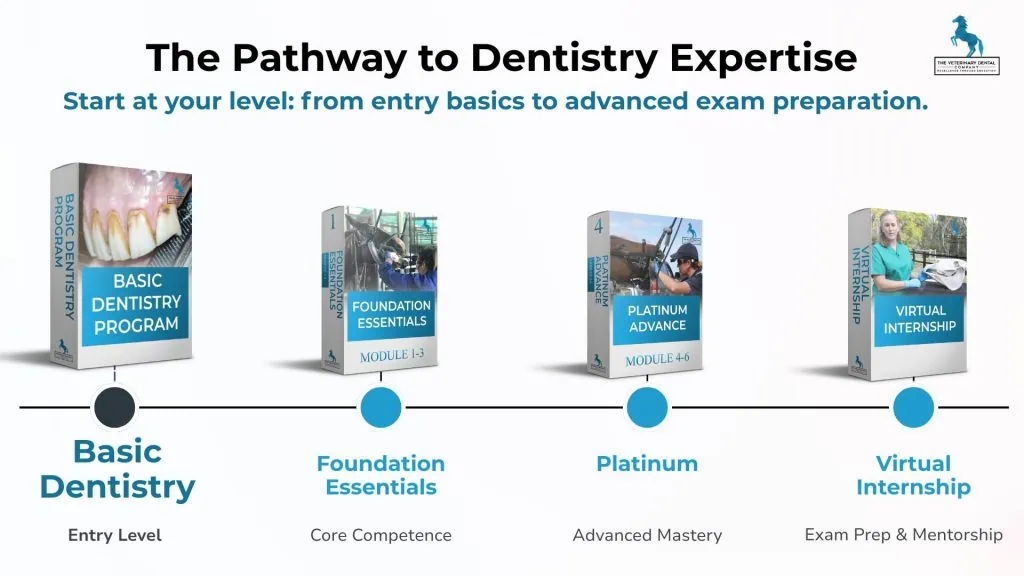
That’s exactly why we designed a tiered learning model for equine dentistry training for veterinarians, built around flexibility, mentorship, and measurable milestones:
- Basic Dentistry – entry-level confidence in oral exams, ageing, and instrumentation.
- Foundation Essentials – structured, 12-month training covering pathology, radiography and client communication.
- Platinum Program – advanced extractions, restoratives, and practice-building strategies.
- Virtual Internship – mentored preparation for ANZCVS Membership and clinical mastery.
Each level builds on the last. No guesswork. No wasted effort. Just steady, supported progression.
If you’re ready to finally feel confident performing a full oral examination – without leaving home or spending thousands – start with The Basics of Veterinary Equine Dentistry.
This is the starting point for real clinical confidence. It’s ideal for veterinarians who already perform floats but feel something’s missing… or those who want to get started the right way from day one.
You’ll learn how to:
- Perform a complete 7-step oral exam with structure and purpose
- Recognise what’s normal (and what’s not)
- Communicate findings clearly to owners
- Build confidence in radiography and diagnosis – even under time pressure
It’s not another weekend course. It’s the core training you should’ve had from day one – designed by the world’s leading equine dental specialists. And best of all, it’s self-paced and online, so you can learn on your schedule, from anywhere.
If you’ve been waiting for the perfect place to begin your equine dentistry journey, this is it for veterinary professionals seeking structured, practical learning.
👉 Explore The Basics of Veterinary Equine Dentistry →
Start building the foundation for the confidence, structure, and skill that every equine practitioner deserves.
6. Three Practical Ways to Move Forward
Even if you’re not ready to dive into a full program yet, you can start closing the gap today:
- Block 30 minutes a week for CE. Consistency matters more than volume.
- Set one clinical goal per month. For example: interpret one dental radiograph with confidence.
- Seek structured mentorship. Whether it’s through a course or a colleague, accountability accelerates learning.
7. A Final Thought
Veterinary school gave you the foundation. Structured postgraduate learning gives you mastery.
If you’ve ever wondered whether you’re capable of doing more advanced equine dentistry – you are. You just need the right framework and support to prove it to yourself.
Because the truth is: when veterinarians gain confidence in dentistry, horses receive better care, owners trust more deeply, and the profession grows stronger.
References
- Lund E.M. et al., Journal of Veterinary Medical Education 2016 – Survey of dental curricula in 35 veterinary schools.
- Rhodes M. et al., Veterinary Record 2022 – Barriers to CPD: “time, distance, and money.”
- British Veterinary Association CPD Survey 2023.
- Hooper D. et al., Veterinary Record 2020 – 68% of vets exceed the imposter-syndrome cutoff.
- Martinez E. et al., BMC Vet Research 2022 – Confidence vs knowledge gaps in clinicians.
- AAEP Position Statement on Equine Dentistry (2021).
- Australian Veterinary Association Policy on Equine Dentistry (2022).
- Veterinary Practitioners Board of NSW v Zander (2020) – case findings on harm from unqualified dental work.