
Chris White – Equine Sports Medicine and Lameness Diagnosis
DVM

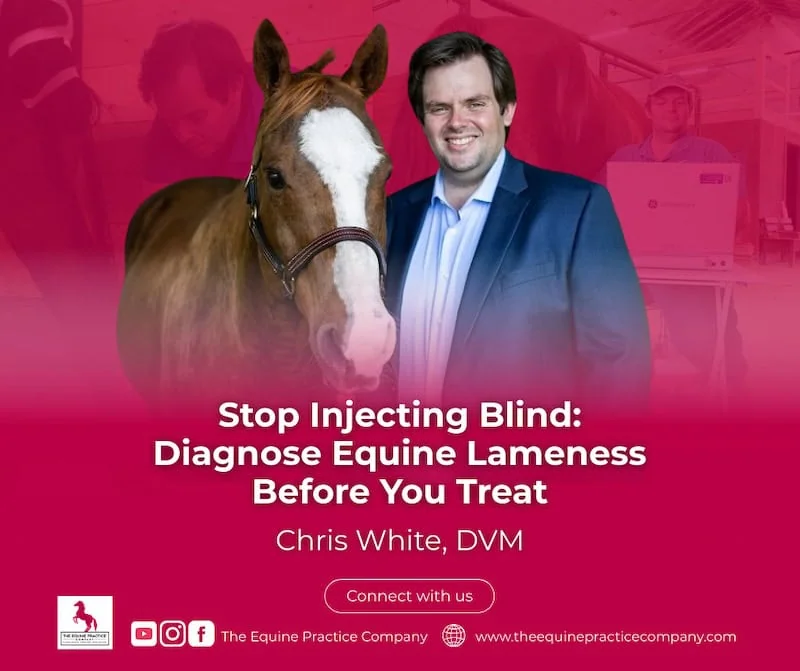
Chris White, DVM, is a leading figure in equine sports medicine, renowned for his expertise in diagnosing and treating lameness in performance horses. His journey from a childhood in Litchfield, Maine, to becoming a respected veterinarian in Nova Scotia, Canada, reflects his lifelong dedication to equine health.
Dr. White’s career reflects the evolution many equine veterinarians experience – from early procedural confidence to diagnostic precision, and from protocol-driven habits to judgement-based clinical decision-making.
For practitioners seeking to refine their lameness evaluation, imaging interpretation, and treatment planning, that progression is both professional and personal – and often shaped by experience.
Early Life and Education
Growing up in central Maine, Chris White was immersed in the world of horses, training and competing in barrel racing events. His early experiences with his own horse’s lameness issues sparked a passion for veterinary medicine, particularly in helping horses overcome similar challenges.
At 18, White moved to Prince Edward Island, Canada, to attend the University of Prince Edward Island. He earned both his Bachelor of Science and Doctor of Veterinary Medicine degrees from the Atlantic Veterinary College. During his studies, he developed a keen interest in equine lameness and imaging.
Dr Chris White Professional Experiences
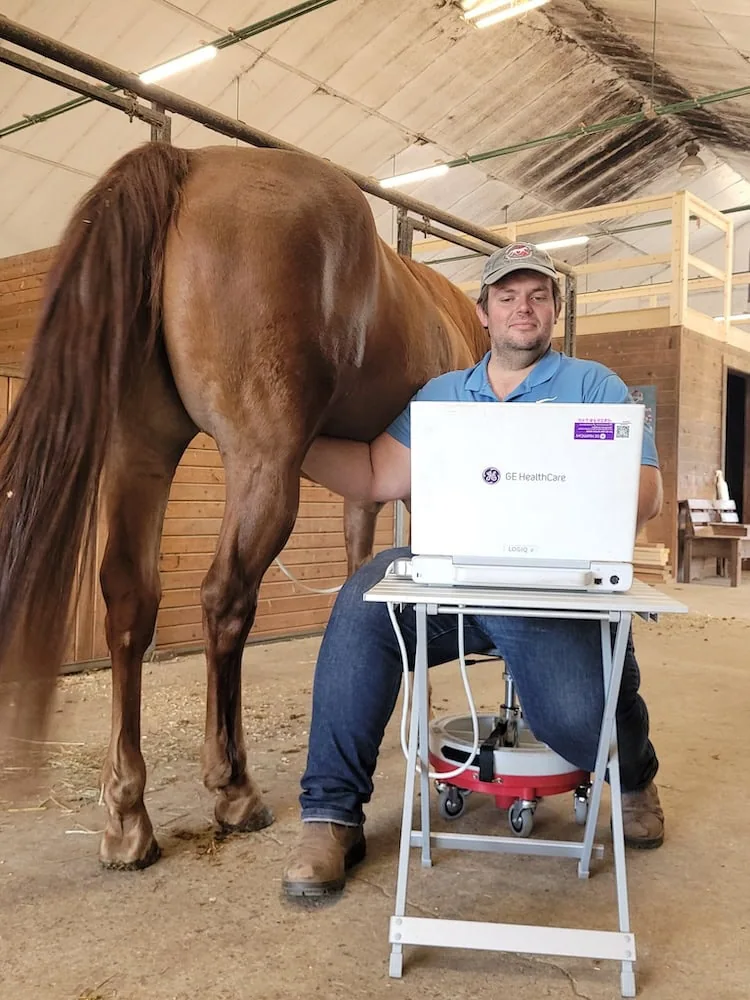
After completing a year-long internship at the Equine Clinic at OakenCroft in Upstate New York, Chris White returned to Southern Maine to join TNT Equine. There, he led the sports medicine service, focusing on wellness and performance care for horses across Maine and New Hampshire.
In 2021, Chris White relocated to Nova Scotia, Canada. His services soon expanded to include standing procedures and biologic injectables for intra-articular use, catering to a diverse clientele ranging from high-end performance horses to rural backyard operations. He is currently in the midst of getting his certification from the International Society of Equine Locomotor Pathology, or ISELP.
As of 2025, Dr. White, his wife, Dr. Damita Hansen, and their business partner, Dr. Kristen Pyke struck off on their own and founded Valley Equine Clinic, an equine ambulatory practice that services the Annapolis Valley. Dr. White focuses on sports medicine, but is happy to work in dentals, vaccines, and cover on call.
His role involves advanced lameness imaging and diagnostics, accepting referrals to enhance the performance of equine patients in the Annapolis Valley and beyond.
Practice Evolution: A Conversation with Dr. Chris White on Lameness and Decision-Making
Dr. Chris White sat down with us to discuss how his approach to the “standard” lameness case has changed over the years.
1. What’s something you do differently in practice now compared to earlier in your career?
Dr. White: “Though I’m in rural practice here in Canada, I see a majority of lameness and sports medicine cases. When you see so many, it’s easy for them to run together. In my preparation for my ISELP exam, a large portion involves collecting and presenting cases, which includes filming horse gait analysis.
I’ve found this so helpful in my rechecks; I can look on the farm at what a horse looked like prior to injections or shockwave. I might have needed to increase my phone storage, but it is incredibly valuable!”
2. Where does clinical judgement matter more than protocols?
Dr. White: “Blocking out a lameness is incredibly important, but I am not going to put myself in danger to do so. I had a 2-year-old filly I looked at last week – wonderful owner, but the horse was just fresh and kicking out even during my initial physical. That hindlimb lameness was not blocked out. If she had been more suitable, I would’ve tried.
I’ve also become a big fan of lidocaine cream over the site prior to needle placement. It has helped my practice immensely and I tell anyone who will listen (I am not sponsored by Xylacaine Cream, but am open to negotiations).”
3. What is your process when you are unsure about a case?
Dr. White: “Mentorship is about more than just teaching; it’s providing support to younger veterinarians. I have a number of mentors I still talk to on a regular basis when I’m faced with a tough case or even some imposter syndrome. I regularly talk to Drs. Steve Naile, Bri Henderson, Yvonne Elce, and Suzanne Jaynes – veterinarians who have taught me and supported me throughout my career.”
4. What mindset should every equine veterinarian develop?
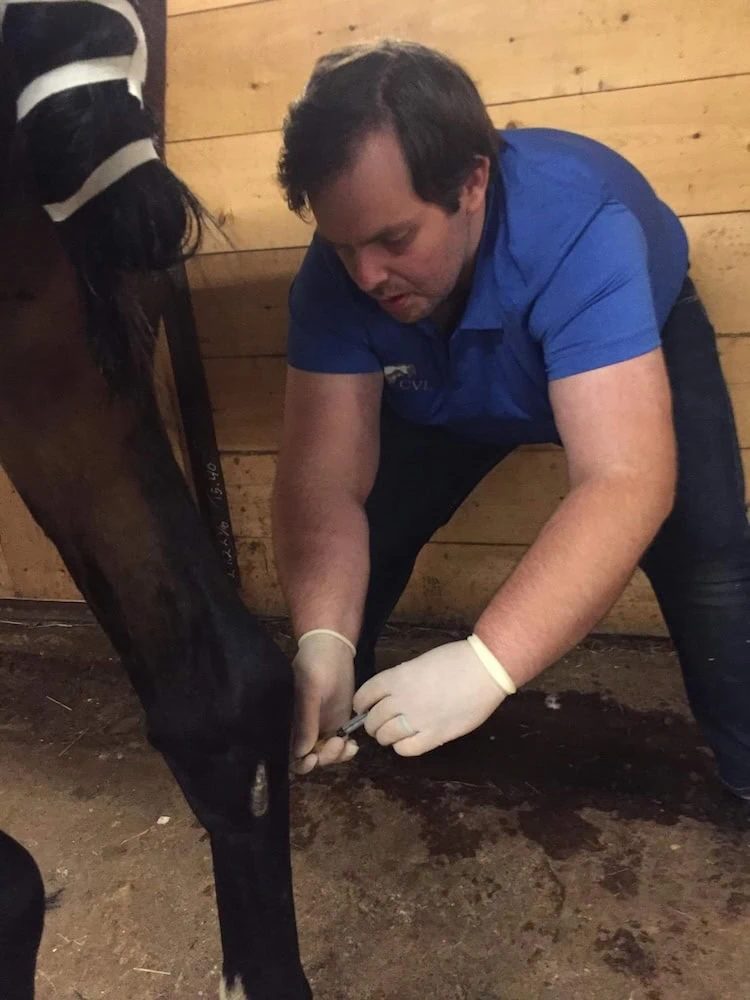
Dr. White: “Early in my career, it was so exciting to inject a joint. I would often take appointments for those who called in ‘for injections’ – no workup, no imaging, just show up and inject because a trainer thought it would help.
That is not my modus operandi anymore. We have a conversation about why a proper exam is necessary and imaging is ideal. ‘Hock injections’ will probably not resolve an uncovered 3/5 left forelimb lameness.”
5. What is the most common mistake in hindlimb lameness cases?
Dr. White: “Practitioners often jump to intra-articular hock injections because a horse flexes positive and radiographs are relatively normal. I’ve done it. But I’ve had horses with proximal suspensory desmitis that, after hock injections, became markedly worse because the suspensory ligament was overloaded.
The goal of a lameness exam should be discovering why the horse is lame. A proper diagnosis leads to proper treatment, which leads to a better outcome. I will usually radiograph and ultrasound most of my hindlimb cases prior to treatment.”
6. With so many IA options (Steroids, Biologics, Hydrogels), how do you decide?
Dr. White: “There are ten ways to skin a cat, and my choice of ‘cocktails’ is often different than my colleagues.
Hydrogels: An exciting newer therapy to replace joint fluid. I’ve had success using these in severe OA cases where biologics won’t be effective, sometimes combining them with steroids first to lessen inflammation.”
Corticosteroids: Still the most common because they are available and budget-friendly, but there are valid safety concerns with continued usage.
Orthobiologics: My favorite therapy. I use PRP for soft tissue, APS for joint therapeutics, and IRAP less often due to centrifuge logistics. However, if a joint has marked bony change (severe OA), I stay away from biologics; I think we are beyond their window at that point.
Professional Affiliations and Writing
Chris White is a member of the International Society of Equine Locomotor Pathology (ISELP), working towards certification to further his expertise in equine locomotor pathology. He is also a founding member of the Atlantic Association of Equine Practitioners, demonstrating his leadership in the veterinary community.
As a freelance writer for The Horse Magazine, White contributes articles on various topics, including sports medicine and equine health, sharing his knowledge with a broader audience.
Dr Chris White’s Personal Life
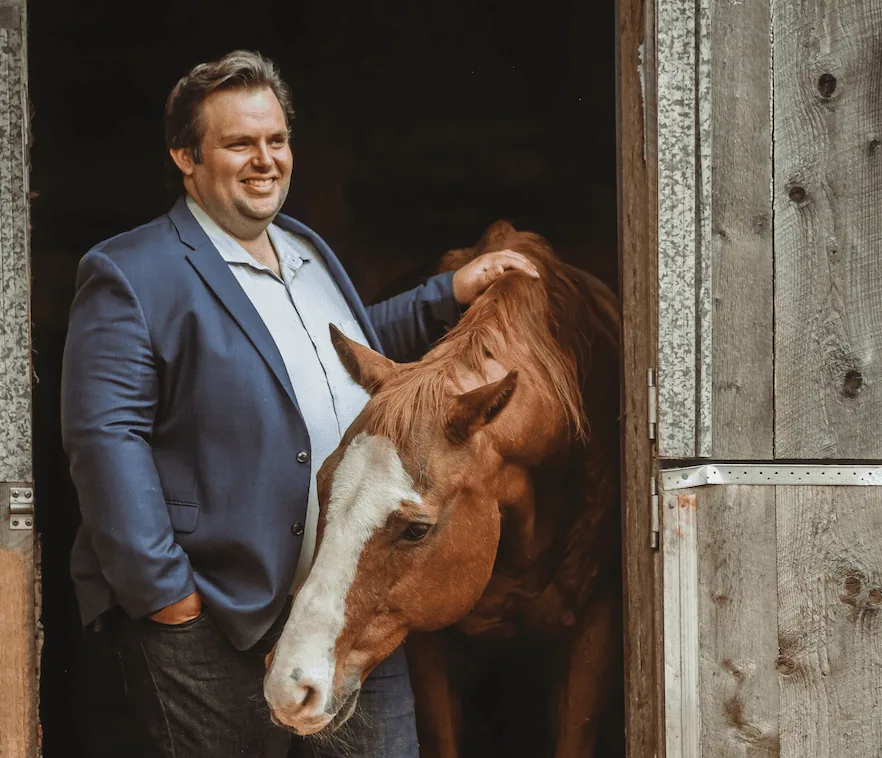
Dr. Chris White resides in Sheffield Mills, Nova Scotia, with his wife, Dr. Damita Hansen. They share their home with Copper, his childhood barrel horse, who remains part of both his life and professional journey.
Outside of practice, he enjoys exploring the wineries of the Annapolis Valley, karaoke nights, and (reluctantly) the gym.
Continuing the Evolution of Practice
Dr. White’s career reflects the trajectory many equine veterinarians follow – from procedural enthusiasm to diagnostic discipline, and from confidence to clinical clarity.
For practitioners seeking to deepen their expertise in lameness evaluation, imaging, and evidence-based treatment planning, structured continuing education remains central to that evolution.
The Equine Practitioner’s Program is a continuing education experience built by equine veterinarians, for equine veterinarians.
Designed to bridge cutting-edge science with clinical practicality, this program features leading minds such as Dr. Sue Dyson, a global authority in equine performance and lameness, Dr. Dylan Gorvy, renowned for his surgical and dental expertise, and Associate Professor Steven Zedler, a leader in equine medicine and pathology.
Equip yourself with the insight, confidence, and tools to elevate your practice and deliver the highest standard of equine care.